- 1457 Jordan Ave, Crofton, MD 21114


Brainspotting Therapy In Crofton, MD
What Is Brainspotting Therapy?
I often describe Brainspotting as “EMDR-adjacent.” David Grand, who developed Brainspotting, was an EMDR (Eye Movement Desensitization and Reprocessing) therapist when he discovered that, as he says, “Where you look affects how you feel.”
It was 2003, and he was doing EMDR with a figure skater who was unable to do a triple loop. He noticed her eyes wobbling at a certain point while she was following his fingers. He held his fingers still and asked her to continue looking at that spot. He was amazed when, over the next ten minutes, traumatic material came up that had not appeared in the year of intensive therapy they’d done to that point.
The next day the skater called him and told him that she had successfully done repeated triple loops. He immediately began trying the technique with other clients, to great success.
Brainspotting vs. EMDR
In a Brainspotting session, the therapist helps the client to locate and focus on one or more “brainspots” that are activated when they think about the issue they want to work on. Focusing the eyes on the brainspot facilitates the processing of the issue.
Because it is similar to EMDR, Brainspotting has been learned and tested by many EMDR therapists. Many studies have compared the results of EMDR and Brainspotting therapy and have found that Brainspotting is just as effective as EMDR and is, in some cases, more effective.
Because Brainspotting is a relatively new type of therapy, it has not had as much research done as therapies that have been around longer. Nevertheless, it has been shown to effectively treat trauma, depression, anxiety, dissociation, substance abuse, chronic pain, and performance anxiety.[1]
[1] https://brainspotting.com/about-brainspotting/research-and-case-studies/
How Does Brainspotting Work?
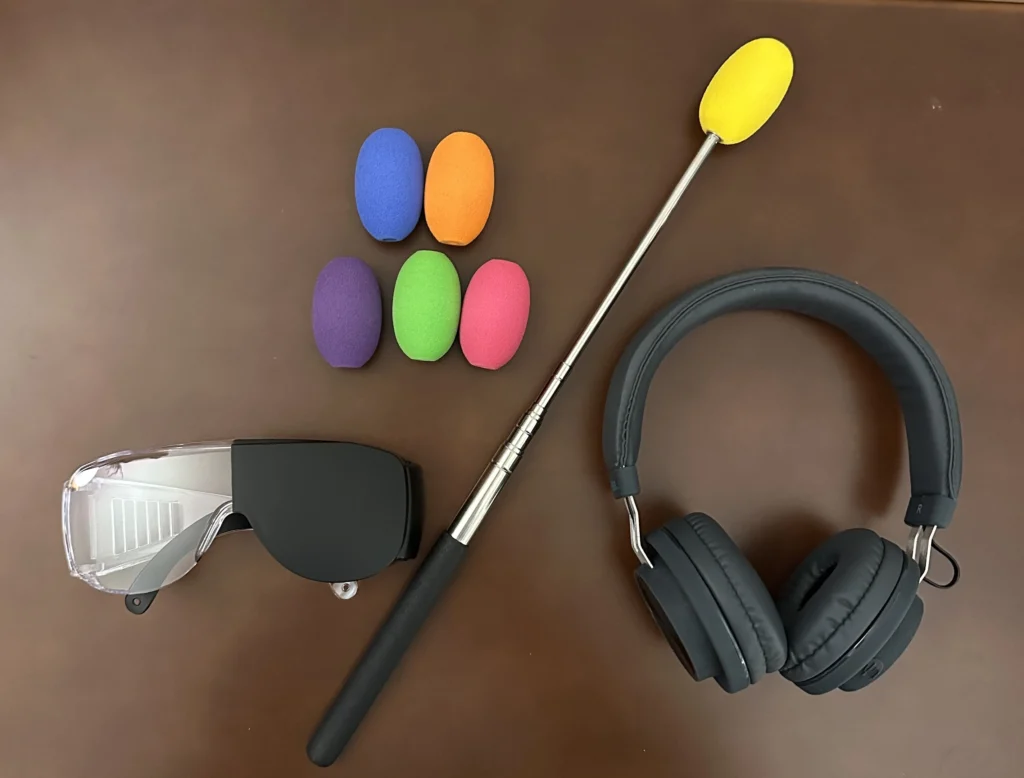
In a Brainspotting session, the client and I work together, using one of a number of Brainspotting “frames” (including Outside Window, Inside Window, and Gazespotting, among others), to find a brainspot related to the issue the client wants to work on. If the client wishes, they can use headphones to listen to special bilateral music during the session. I use a pointer to bookmark the brainspot and “hold the frame” for the client as they process the issue.
The client decides whether or not to talk about what is going on during their processing. This is an aspect of Brainspotting that many people appreciate; they only talk about their traumas if they choose to do so.
I check in with the client periodically, but otherwise I let the process flow on its own. After processing, the client and I debrief and help the client transition out of the session and back into their day.
What Kind Of Therapy Is Brainspotting?
As all of my preferred therapeutic techniques are, Brainspotting is a “bottom up” rather than a “top down” approach. While talk therapies like CBT engage the prefrontal cortex, Brainspotting engages the midbrain, which allows access to traumatic memories. It enables the client’s mind to heal both “big T” and “little t” traumas that lead to PTSD, C-PTSD, depression, anxiety, dissociation, substance use, chronic pain, and more.
Brainspotting, like EMDR, helps clients to reprogram their brains so that they are no longer stuck in the negative mental, emotional, and physical patterns that brought them to therapy.
Brainspotting draws on the brain’s remarkable capacity for healing. I use my decades of experience and my therapeutic presence to support the client’s process. In Brainspotting terms, I stay in the “tail of the comet” to follow and support clients wherever their brains take them.
Why Brainspotting?
I first became interested in Brainspotting therapy because I knew it was somewhat related to EMDR. I have had a great deal of success using EMDR with clients, but there are some for whom it does not work as well. For this reason, I began training in Brainspotting. When I saw how effective it was, I decided that I would take my training further and pursue certification.
I appreciate being able to offer both EMDR and Brainspotting as options to my clients. For clients who prefer more structure, EMDR may work best. Other clients may choose the less-structured Brainspotting. I also have clients who use both, depending on the issue and how they’re feeling on a given day.
What Is It Like for Me to Offer Both EMDR and Brainspotting Therapy?
I have found that my EMDR and Brainspotting practices inform each other. My experience as an EMDR therapist made Brainspotting a natural fit, because there is overlap between the two. My experience as a Brainspotting therapist has changed the way that I “hold the frame” while I’m doing EMDR therapy.
David Grand, founder of Brainspotting therapy, has said “There’s no turf when it comes to healing,” and I agree. I have developed expertise in multiple therapeutic modalities so that I can more easily tailor therapy to my individual clients.