- 1457 Jordan Ave, Crofton, MD 21114


Alcohol Abuse Counseling In Crofton MD
Are You Afraid That Your Drinking Might Be Out of Control?
- Do you feel like you don’t know how to stop drinking?
- Have your family and friends expressed concerns about your drinking?
- Do you feel isolated?
- Do you wonder how you got to this place?
I’ve never known anyone who set out to have a drinking problem; it usually sneaks up on you. It’s like there’s a line between non-problematic drinking and problematic drinking that you can’t see until after you’ve crossed it.
You might have seen family members use alcohol to try to cope with difficult situations. If they didn’t know any other ways to cope, they wouldn’t have been able to teach them to you. Therefore, there’s a good chance that when you encountered seemingly unsolvable problems, you might have turned to alcohol, too.
How Does Drinking Get Out of Hand?
At first, drinking seems like a great solution. It feels like a way you can take control of your life. Unfortunately, at some point the situation usually flips. Suddenly it’s in control of you, and it’s doing exactly the opposite of what you wanted.
I worked at Chrysalis House, a residential treatment program for women with addictions, for several years at the beginning of my career as a therapist. One of the first assignments the women had was to write a goodbye letter to alcohol and drugs. The assignment made a lot of sense, because alcohol and drugs can be like bad boyfriends/girlfriends. At the beginning of the relationship, they love-bomb you and make you feel good. Gradually, though, they become more and more controlling and abusive. They’ve isolated you from anyone who may have been able to help you. It feels like there’s no way out.
Guess what? There actually is a way out: alcohol abuse counseling.
Many People Have Problems With Alcohol, But They Often Don’t Talk About It
People have been drinking alcohol for almost as long as there have been people. It feels good. It helps you to socialize. It can make you feel like your problems have gone away, at least temporarily. Attempts to ban alcohol (like the U.S. Prohibition era in the 1920s and early 1930s) have generally failed.
Things are starting to shift now, but for most of my life, it seemed like you weren’t an adult unless you drank. Having a drink was presented as a good way to “take the edge off” and recover from a stressful day. It was really hard to find a social event that didn’t involve drinking, and people would give you strange looks if you said you didn’t want to drink. There were also medical studies that said that having a glass of red wine every day was good for your heart.
Alcohol Use Disorder
Not surprisingly, this emphasis on drinking has made Alcohol Use Disorder (AUD) a problem for many people. The 2024 National Survey on Drug Use and Health (NSDUH) says that 27.1 million adults 18 years or older in the US had AUD in the previous year. That’s 10.3% in that age group.
A number of factors can contribute to the development of AUD, including having a family history of AUD, experiencing trauma as a child, having a mental health disorder (such as depression, anxiety, bipolar disorder, or schizophrenia), and social pressures.
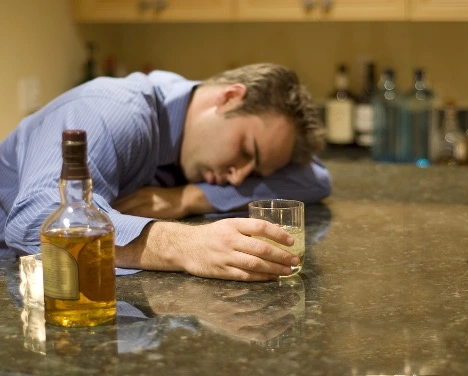
Most People Who Seek Treatment for AUD Will Benefit From It
There was a time when alcohol abuse counseling consisted of telling the client something to the effect of “You’re a terrible person—now stop drinking!!” Not surprisingly, that didn’t work. Many people use alcohol because they already feel like they’re bad people; they’re drinking to try to escape those feelings. If you come to me for alcohol counseling, you can rest assured that I will not call you a terrible person, because I know you’re not! Instead, I’ll help you find ways other than drinking to cope with what’s going on in your life, and we’ll work on the underlying issues that contribute to your drinking.
I believe that a safe, compassionate environment is essential for all therapy, including therapy for AUD. When I do alcohol abuse therapy, I use motivational interviewing (MI), a therapy technique that helps you to determine your own goals and find your own reasons to strive for them. Most people who have problems with drinking are ambivalent about it. Part of them wants to cut back or stop, and part of them doesn’t. If I push you to stop or cut back, the part of you that doesn’t want to change will push back, and we won’t get anywhere. MI is like a dance, and if I step on your toes, the dance will fall apart. No matter what happens with your drinking, you can count on me not to judge you, because I know that AUD isn’t a character flaw or a weakness.
Support and Accountability Are Important for Alcohol Recovery
With therapy and outside support, you can achieve your goals regarding drinking. I generally recommend a support group of some sort, whether it’s the 12-step recovery group Alcoholics Anonymous, the Christian recovery group Celebrate Recovery, or the secular recovery group SMART Recovery. These groups are helpful for both support and accountability.
I’ll help you learn new coping strategies. Using therapy modalities like EMDR, IFS, Brainspotting, and/or sandtray therapy, I can help you to identify the patterns of thinking, feeling, and behaving that underlie your drinking and help you to change them. Limiting or stopping drinking is only the first step; if you want to continue to be successful, you need to heal the wounds that led to the problem in the first place.
How Do You Know I Can Help You?
I have been an alcohol abuse therapist for 22 years, starting when I was in graduate school. I did my final graduate school internship at Chrysalis House, a residential treatment center for women with addictions, and then worked there for three years after I graduated. In addition to being a Licensed Clinical Professional Counselor (LCPC), I am a Licensed Clinical Alcohol and Drug Counselor (LCADC).
Although I grew up in a family that didn’t drink and was in my 20s when I had my first drink, I learned the same unhelpful ways of thinking and feeling that can lead to AUD. If I hadn’t done an internship at Chrysalis House, I never would have realized that the dysfunctional dynamics in my household were the same as those in an alcoholic household. I learned how to change the ways I thought and behaved, and I can help you to do the same.
Some Common Questions About Alcohol Abuse Counseling
I think you’re going to tell me to stop drinking. What if I don’t want to do that?
You are the one who will decide the goals for our work together, not me. If your goal is just to cut back on drinking, not stop entirely, that’s the goal we’ll go for.
If I decide to quit, and then I drink again, does that mean I’ve lost all of the progress I made?
One of the things that I don’t love about Alcoholics Anonymous is its emphasis on sobriety dates. If you decide that your goal is to stop drinking, and then you have a drink, I’ll encourage you to look at it not as a relapse, but as “doing more research”—you aren’t sure if it’s a bad idea for you to drink, so you do more research (by drinking). If your research tells you that drinking is still a bad idea, you can stop drinking again. No problem.
If you don’t have AUD, you won’t understand why it’s so hard for me not to drink.
It is true that I have never craved alcohol. I have, however, craved other things, and I know how hard it is to resist cravings. I have also spent decades working with people who have AUD, so even without personally having experienced a craving for alcohol, I have a better sense of what it’s like than most people do.
Are you ready to heal?
Take the first step towards breaking the cycle of addiction and family dysfunction. Call or text 410-888-0590, or email JenniferBeall.LCPC@gmail.com to schedule an appointment today.