
The Connection Between “Inside Out” and IFS
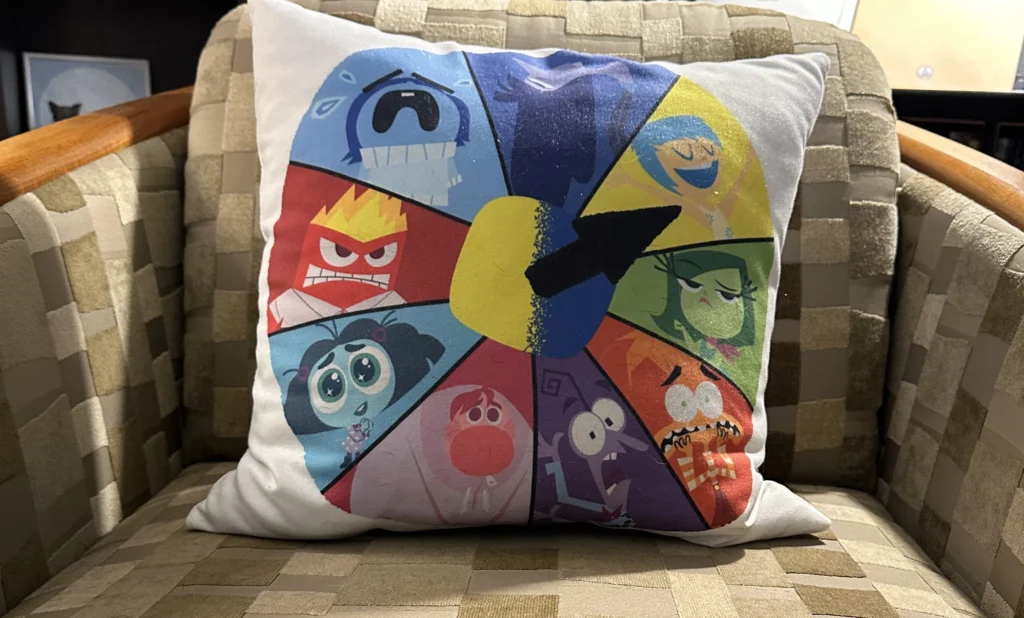
Jennifer Beall (Warning: contains movie spoilers.) The Inside Out movies are great PR for Internal Family Systems (IFS) therapy. They introduce the idea that we all have lots of parts of ourselves, and all of our parts are trying to be helpful, even when they aren’t really qualified to help. In the movies, the parts are all emotions. Both movies show what can happen when one of a person’s parts temporarily takes over the system. IFS calls this being blended with a part. The main character of both Inside Out and Inside Out 2 is a girl named Riley. In the first movie, Riley is eleven years old, and she and her family have just moved from Minnesota to San Francisco. The parts/emotions that are featured are Joy, Sadness, Anger, Fear, and Disgust. Joy believes something that many people do: that emotions other than joy (and its variations) are “negative” emotions. They are certainly emotions that many of us don’t want to feel, and often are discouraged from feeling, but they’re not negative. It’s what you do with the emotions that can be positive or negative. In the first movie, Joy tries to keep Sadness from touching any of Riley’s memories, because she only wants her to have happy memories. There is a struggle, and Joy and Sadness are accidentally pulled out of “Headquarters.” In their absence, Anger, Fear, and Disgust try to keep things running smoothly. Needless to say, it doesn’t go well. For instance, Anger convinces Fear and Disgust that Riley should run away from home and go back to Minnesota so she can be happy. At the end of the movie, Joy and Sadness make it back to Headquarters. Sadness is able to fix a problem with the emotion control console, and Riley goes home to her parents. Joy hands Riley’s memories of Minnesota to Sadness, and Riley begins to cry, telling her parents that she misses Minnesota. They hug her and tell her that they miss it, too. Joy and Sadness work together at the console, and a memory is formed that is both sad and happy. In Inside Out 2, Riley is thirteen years old and about to go to high school. She now has a new part of her mind, a Sense of Self. It seems Joy has forgotten that it’s ok for Riley to have sad memories. She wants Riley’s Sense of Self to have only happy memories, so she creates a mechanism that sends bad memories to the back of Riley’s mind. Riley enters puberty, and four new emotions (Anxiety, Envy, Embarrassment, and Ennui) come on the scene. The new emotions lock the original emotions in a vault and start to form a new Sense of Self that’s centered around Anxiety. The original emotions get out of the vault, and Sadness goes back to Headquarters while Joy, Anger, Fear, and Disgust rescue Riley’s original Sense of Self. Not surprisingly, the Anxiety-led Sense of Self does not work out. Riley ends up having a panic attack in a tryout for the hockey team at her new high school. Joy gets back to Headquarters and reinstates the original Sense of Self, but that doesn’t end the panic attack. Anxiety and Joy realize that neither of them gets to decide who Riley is. A new Sense of Self, containing both happy and sad memories, develops. All of the emotions approve of this third version of Riley’s Self, and Riley calms down. Joy goes back to the console and helps Riley to enjoy the rest of the tryout. The people in the Inside Out movies have less complex systems of parts than actual humans do, but the basic principles are the same: there are no bad parts, and life generally works most smoothly when the parts cooperate with each other and with the person’s Self (which is like a parent to the parts). If you’d like to get to know more about your internal system of parts, fill out the contact form, book a consultation, or call or text me at 410-888-0590.